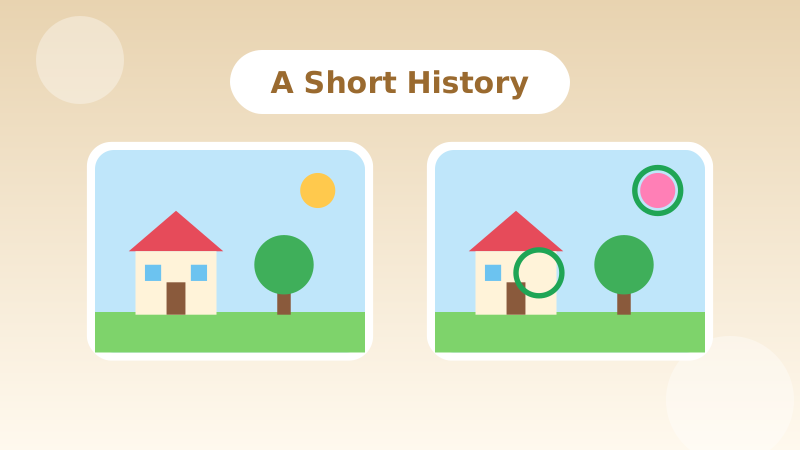
Two nearly identical pictures, side by side, with a handful of hidden changes. Few puzzles are so instantly understood by people of every age and language. Spot the difference has gone from newspaper pages and children's magazines to pub touchscreens and, today, phones in nearly every pocket. Here is a short look at where the puzzle came from and why it has lasted.
Picture puzzles in print
Visual puzzles have been popular for as long as printed pictures have been cheap to make. Through the nineteenth and early twentieth centuries, newspapers and magazines filled their pages with rebuses, hidden-object drawings, mazes and "what's wrong with this picture?" illustrations, where readers hunted for clocks with thirteen hours or a man holding his umbrella upside down. These puzzles shared one key idea: the fun comes from looking carefully at an image that seems ordinary at first glance.
The side-by-side "find the differences" format fits naturally into this tradition. It is easy to print, it needs no words to explain, and it works in any country. Puzzle pages in newspapers and weekly magazines around the world adopted it, often under names like "spot the difference", "find the differences" or "spot the changes". In many languages the name is simply a translation of "find the differences".
A staple of children's activity books
For children, picture puzzles became a fixture of activity books, comics and magazines. The American children's magazine Highlights for Children, founded in 1946, made its "Hidden Pictures" puzzles famous, and spot-the-difference pages became just as common in activity books, puzzle annuals, cereal boxes and restaurant placemats. They were cheap to print, kept children busy and quietly taught them to observe. Many adults today remember doing these puzzles in a waiting room or on a long car journey.
Television and touchscreens
As television grew, the format appeared on quiz and game shows and in children's programmes, often as a quick round where contestants raced to spot changes on screen. The real leap, though, came with the touchscreen. In the 1990s and 2000s, countertop touchscreen arcade machines, the kind found in bars and cafés, often included a photo-based spot-the-difference game. Instead of circling a change with a pen, players simply touched it, and a timer added pressure. That combination of touch, timer and photograph turned a quiet paper puzzle into a fast, competitive game.
The smartphone era
When smartphones and tablets arrived, spot the difference felt as if it had been designed for them. The puzzle needs only a touch to play, works in short sessions, and suits a screen held in one hand. Mobile versions added new ideas:
- Zooming to inspect details on a small screen.
- Hints that reveal a difference when you're stuck.
- Lives or penalties for wrong taps, so random tapping doesn't pay.
- Levels and worlds that give a sense of journey and progress.
- Daily challenges that make the puzzle a daily habit.
- Stars and rewards for finishing quickly and accurately.
Illustration styles also changed. Many modern puzzles use bright digital art or rich, detailed scenes rather than simple line drawings or stock photos, which gives designers far more places to hide changes.
Why it has lasted
Plenty of puzzle styles have come and gone, yet spot the difference keeps finding new audiences. A few reasons stand out:
- No instructions needed. Two pictures side by side explain themselves, at any age and in any language.
- Instant reward. Every difference you find is a small "aha!" moment.
- It is genuinely hard. Thanks to a quirk of the brain known as change blindness, even obvious changes can hide in plain sight.
- It is relaxing. Unlike word or number puzzles, it asks you to slow down and look, which many people find calming.
- It suits short breaks. A puzzle takes a minute or two, perfect for a coffee break or the bus.
Where Diffora fits in
Diffora is our take on this long tradition. We kept the core that has worked for generations, two pictures and a set of differences, and added what modern players enjoy: themed worlds to travel through, a timer, hearts for wrong taps, hints when you're stuck and a daily challenge. Levels range from bright, simple scenes for young children to detailed expert puzzles for adults. You can try a puzzle in your browser right now, no download or sign-up needed.
Whether on a newspaper page or a phone screen, the pleasure is the same as it always was: the moment a detail you've looked at ten times suddenly jumps out.